
Dholera, Gujarat, is increasingly becoming a focal point in India’s semiconductor and advanced manufacturing ambitions.
The development of Tata Electronics’ semiconductor fabrication facility in Dholera represents more than the construction of a large manufacturing plant. It could become an important building block in creating a broader ecosystem involving technology, suppliers, logistics, skilled employment, infrastructure and supporting businesses.
As India works to strengthen its position in the global semiconductor supply chain, Dholera offers an interesting example of how industrial development can influence the economic landscape of an emerging city.
Dholera’s Semiconductor Story
Tata Electronics is developing a 300 mm (12-inch) semiconductor fabrication facility in Dholera, Gujarat, in partnership with Taiwan’s Powerchip Semiconductor Manufacturing Corporation (PSMC).
The planned facility is designed to manufacture analog and logic integrated circuits, with Tata Electronics stating that the fab is expected to have a total monthly capacity of up to 50,000 wafers across technologies ranging from 28nm to 110nm. Its applications are expected to include automotive, computing, communications, artificial intelligence and other technology sectors.
The project has a planned investment of up to ₹91,000 crore, according to Tata Electronics, and was described by the company as India’s first AI-enabled semiconductor fabrication facility.
In April 2026, the Government of India also notified a 66.166-hectare SEZ for Tata Semiconductor Manufacturing Private Limited at Dholera, designed for electronic hardware, software and IT/ITES activities. The government said the SEZ is expected to provide employment to around 21,000 people.
These developments make the semiconductor project an important component of Dholera’s emerging industrial ecosystem.
1. Semiconductor Manufacturing Can Create a Larger Industrial Ecosystem
A semiconductor fab does not operate in isolation.
Chip manufacturing requires highly specialised equipment, chemicals, gases, materials, logistics, engineering services, maintenance, technology support and other inputs.
This means that the development of a large semiconductor facility can potentially create opportunities for ecosystem companies and specialised suppliers to establish operations nearby.
Recent developments already indicate this direction.
In September 2026, Tata Electronics announced collaborations with companies including Sojitz Corporation and NRS Corporation to explore a semiconductor materials supply chain supporting the Dholera fab. Tata Electronics also announced a collaboration with Kelington for critical infrastructure and systems required for semiconductor manufacturing.
This illustrates an important principle:
A major industrial project can become the starting point for an entire network of supporting businesses.
2. Skilled Employment Could Become an Important Growth Driver
Semiconductor manufacturing is highly technology-intensive.
It requires engineers, technicians, researchers, equipment specialists, process experts, software professionals and other skilled workers.
Tata Electronics has estimated that its Dholera fab could generate more than 20,000 direct and indirect skilled jobs.
As the ecosystem expands, employment could extend beyond the fab itself into areas such as:
- Engineering and technical services
- Equipment maintenance
- Logistics and supply-chain management
- Industrial services
- Research and development
- IT and software
- Facility management
- Professional services
Employment growth can, in turn, influence the demand for supporting services and urban infrastructure.
3. Global Technology Partnerships Are Expanding the Ecosystem
Another important aspect of Dholera’s semiconductor development is the growing number of international technology partnerships.
In May 2026, Tata Electronics and ASML announced a strategic partnership to support the establishment and ramp-up of the Dholera fab. The collaboration includes lithography tools and solutions, talent development, supply-chain resilience and research infrastructure.
Tata Electronics is also working with PSMC for technology transfer and engineering support for the Dholera facility.
These partnerships matter because a semiconductor ecosystem requires expertise across multiple stages of the value chain.
Over time, such collaboration could help create stronger links between Indian manufacturing capabilities and global technology networks.
4. Infrastructure Becomes Increasingly Important
Semiconductor manufacturing requires more than industrial land.
It depends on reliable utilities, transportation, specialised logistics, high-quality infrastructure and efficient supply chains.
This makes Dholera’s wider infrastructure development particularly relevant.
The region’s development includes planned industrial infrastructure along with improving connectivity to major economic centres.
For a high-value manufacturing ecosystem, efficient connectivity can support the movement of equipment, materials, employees and finished products.
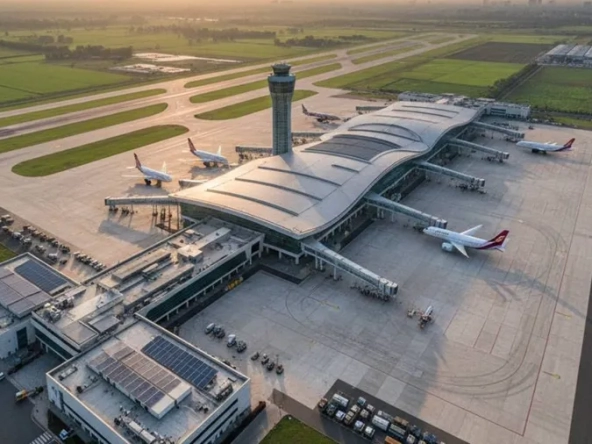
The development of roads, rail, airport connectivity and logistics infrastructure can therefore become an important part of the broader economic story.
5. Semiconductor Manufacturing Could Support Commercial Development
When large industrial projects attract businesses and employment, demand for supporting commercial activities can gradually evolve.
This could include:
🏢 Commercial Spaces
Offices and business facilities for companies serving the industrial ecosystem.
🏨 Hospitality
Hotels and serviced accommodation for business visitors, professionals and project teams.
🛍️ Retail & Services
Restaurants, retail outlets, healthcare, education and other everyday services.
🚚 Logistics
Warehousing, transportation and specialised logistics services.
🏡 Residential Development
Housing requirements can evolve as employment and population increase.
However, it is important to recognise that industrial development does not automatically guarantee real estate growth. The scale and pace of urban development will depend on actual employment generation, infrastructure delivery, business activity and the long-term success of the industrial ecosystem.
6. Dholera Could Move Beyond the Traditional Definition of a Smart City
Dholera is being developed as a Greenfield industrial city and Special Investment Region.
Its semiconductor development adds another dimension to this vision.
Instead of viewing Dholera only through the lens of residential or commercial real estate, it may be more useful to look at the region as a developing economic ecosystem where multiple sectors interact:
Semiconductors + Manufacturing + Infrastructure + Logistics + Technology + Employment + Urban Development
The success of this model will depend on how effectively these components develop together.
7. New Opportunities for Local Businesses
The economic impact of semiconductor manufacturing could also extend to smaller businesses.
As industrial activity increases, supporting businesses may find opportunities in areas such as:
- Transportation
- Equipment servicing
- Food and hospitality
- Facility management
- Construction services
- Professional consulting
- Warehousing
- Security and other industrial services
This can create a broader business ecosystem rather than concentrating economic activity within a single large company.
8. What Could This Mean for Dholera’s Long-Term Growth?
The semiconductor project should be viewed as one important component of Dholera’s larger development story, rather than as the sole reason for future growth.
The long-term impact could depend on several factors:
- How quickly the semiconductor facility becomes operational
- Growth of supporting suppliers and businesses
- Availability of skilled talent
- Development of transportation infrastructure
- Expansion of industrial activity
- Growth of commercial and residential services
- Integration with India’s wider semiconductor ecosystem
If these elements develop successfully, Dholera could gradually evolve from a planned industrial region into a more diversified economic destination.
The Bigger Picture
India’s semiconductor ambitions are not only about manufacturing chips.
They are also about building technology capabilities, supply chains, skilled talent, industrial infrastructure and global partnerships.
Dholera is becoming an important part of that journey.
The Tata Electronics semiconductor fab, partnerships with global technology companies and the development of supporting supply chains could help create a wider industrial ecosystem around the region.
For real estate and urban development, the key lesson is simple:
Economic growth often creates demand beyond the original industrial project.
The real question for Dholera is therefore not simply:
“What happens when the semiconductor fab is completed?”
It is:
“What kind of economic ecosystem can develop around it?”
That is what could determine the next chapter of Dholera’s transformation.
Frequently Asked Questions
What semiconductor project is being developed in Dholera?
Tata Electronics is developing a 300 mm semiconductor fabrication facility in Dholera, Gujarat, in partnership with Taiwan’s Powerchip Semiconductor Manufacturing Corporation (PSMC).
How much is Tata Electronics investing in the Dholera semiconductor project?
Tata Electronics has stated that the planned investment for the Dholera fab is up to ₹91,000 crore, or approximately US$11 billion.
What industries could benefit from Dholera’s semiconductor ecosystem?
Potential supporting sectors include semiconductor materials, equipment, logistics, engineering, technology services, warehousing, hospitality and other industrial support services.
Could semiconductor manufacturing increase housing demand in Dholera?
It could contribute to future housing demand if the project generates sustained employment and attracts supporting businesses. However, the actual scale and timing of residential demand will depend on the broader development of the industrial and urban ecosystem.
Why is Dholera important to India’s semiconductor strategy?
Dholera is the location of Tata Electronics’ planned commercial semiconductor fab and is therefore becoming an important part of India’s effort to develop domestic semiconductor manufacturing capabilities and a wider supporting ecosystem.
Conclusion
Dholera’s semiconductor development represents more than a manufacturing project.
It could become a catalyst for a wider ecosystem of technology companies, suppliers, skilled professionals, logistics providers and supporting services.
As India strengthens its position in the global semiconductor industry, Dholera will be an important region to watch.
The coming years will reveal how effectively semiconductor manufacturing, infrastructure, employment and urban development come together to shape Dholera’s economic future.
Golden Dream Infratech will continue to track the infrastructure, industrial and real estate developments shaping emerging growth corridors across India.